Self-Driving Cars in Europe: What’s Legal and What’s Not in 2026


Europe has legal routes for driverless vehicles—not a continent-wide permission slip. New EU drafts expose the gap between approving a car and allowing it to drive itself.
Self-driving cars in Europe are neither universally banned nor universally legal. European rules distinguish between approving the technology and permitting its use on particular roads. National authorities still control much of the second question—and permission to sell a vehicle does not automatically mean permission to run a driverless service. (eprs.europarl.europa.eu)
That distinction is back in focus this month. European Commission drafts dated November 3 and 4, 2026 would adapt safety requirements written around human drivers for automated vehicles. Both explicitly state that they have not been adopted or endorsed by the Commission. They are proposed changes, not a new license to switch off your attention. (ec.europa.eu)
Here is the position as of November 14, 2026, covering the EU framework and selected national markets—not an exhaustive country-by-country legal opinion.
Key takeaways
- Driver assistance is not self-driving. Under the UN’s driver-control assistance rules, the human remains responsible and must monitor the road and system. (eur-lex.europa.eu)
- Germany permits conditional automated driving and driverless operation under different legal requirements, including approved operating areas for the latter. (gesetze-im-internet.de)
- France has a framework for driverless passenger transport on predefined routes or areas, not unrestricted autonomy everywhere. (strmtg.developpement-durable.gouv.fr)
- Britain has a driverless pilot approval route, but its published list still contains no vehicles recognized as self-driving. (vehicle-certification-agency.gov.uk)
- The latest EU safety proposals remain drafts. Their publication does not change what drivers may do today. (ec.europa.eu)
Self-driving cars in Europe: the distinction that matters
Start with who is doing the driving—not whether the steering wheel moves by itself.
Level 2: assistance, with the human still responsible
Driver-control assistance systems can manage steering and speed together. But UN Regulation 171 treats them as assistance: the driver must continuously monitor the environment and the system’s performance. A sophisticated system does not become legally autonomous simply because it handles more maneuvers. (eur-lex.europa.eu)
The practical answer is straightforward: an assistance feature is not permission to stop supervising. Whether a particular hands-free function may be used also depends on its approval and the applicable national rules. Switzerland’s federal guidance, for example, explicitly distinguishes approved automation from assistance systems that still require hands on the wheel. (eur-lex.europa.eu)
Level 3: conditional delegation, not permanent disengagement
At Level 3, the vehicle performs the driving task within defined conditions, but the human must remain available to take over when requested. That is a different arrangement from continuously supervising assistance—and different again from becoming an ordinary passenger. (astra.admin.ch)
Level 4: driverless within a defined operating envelope
Level 4 systems can drive without human intervention within their specified operating conditions and reach a safe state themselves when necessary. The limitation matters: a system suitable for a designated zone or parking facility is not thereby capable of unrestricted driving everywhere. (astra.admin.ch)
What the EU allows—and what Brussels has not approved
The EU already has a technical approval framework for automated vehicles. Approval granted by one member state generally enables vehicles of that type to be marketed across the EU without repeating the entire technical approval process. But testing, transport licensing and deployment conditions remain largely national or local matters, as the European Parliament’s current briefingexplains. (eprs.europarl.europa.eu)
Think of two separate questions: Does the vehicle meet the applicable technical requirements? And may this operator use it for this service, in this location? A positive answer to the first does not settle the second. (eprs.europarl.europa.eu)
The November proposals address another practical problem: existing safety rules often assume somebody is sitting behind the wheel. The November 4 draft would exclude fully automated vehicles that cannot be driven manually above 6 km/h from specified requirements covering alcohol-interlock installation facilitation, driver-drowsiness warnings, intelligent speed assistance and distraction warnings. (ec.europa.eu)
The companion November 3 draft tackles construction and emergency lane-keeping requirements. Its rationale explicitly links those adjustments to enabling approval of fully automated vehicles produced in large series, rather than relying on small-series arrangements for particular uses. (ec.europa.eu)
These are consequential engineering and regulatory changes. They are not enacted permission for unrestricted driverless travel. The documents themselves remain preliminary drafts. (ec.europa.eu)
Germany: legal automation, with explicit boundaries
Germany’s road-traffic law allows a driver using qualifying automated functions to turn attention away from traffic and vehicle control. However, the driver must remain sufficiently receptive to resume control immediately when the system requests it—or when obvious circumstances show that proper use is no longer possible. (gesetze-im-internet.de)
That makes the claim that drivers must always watch the road too broad. But the opposite claim—that an automated car lets its driver become unavailable—is also wrong under this provision. The obligation to recognize and respond to a takeover situation remains. (gesetze-im-internet.de)
Driverless operation has a separate framework. The vehicle needs an appropriate approval, road registration and an operating area approved by the competent authority. German law also requires autonomous vehicles to recognize system limits and enter a minimum-risk state when necessary. (gesetze-im-internet.de)
Technical supervision does not mean a remote person must continuously drive or watch every movement. The statute expressly envisages independent driving without permanent monitoring by technical supervision, while providing for intervention and approval of alternative maneuvers. Driverless does not mean unrestricted or unaccountable. (gesetze-im-internet.de)
France: driverless services, not a nationwide free-for-all
France’s transport safety authority says its legal framework has allowed automated passenger transport up to Level 4, without a driver aboard, since September 1, 2022. These systems operate on predefined routes or within predefined areas. (strmtg.developpement-durable.gouv.fr)
The French framework centers on demonstrating safety for the transport system and its intended deployment. The transport ministry describes driverless operation with supervision and remote-intervention functions on routes or zones where safety has been demonstrated. (ecologie.gouv.fr)
The distinction for passengers and operators is important. Legal provision for a driverless shuttle or passenger service is not a general authorization for every privately owned car to drive itself around France. The relevant permission concerns a defined system and operating environment—not an automation label alone. That is the practical implication of the route-and-zone-based framework. (strmtg.developpement-durable.gouv.fr)
Britain: a pilot route exists, but the public list still matters
Britain’s position requires separating legal mechanisms from vehicles actually recognized for self-driving use.
The automated passenger-service permit regulations came into force on May 15, 2026. The Vehicle Certification Agency also describes a pilot scheme enabling automated vehicles to operate without a safety driver, subject to assessment of the vehicle, driving system, operation and, where applicable, passenger service. (legislation.gov.uk)
That does not make any suitably equipped car automatically eligible. Government guidance describes a process involving vehicle approval and registration, a vehicle special order, listing as self-driving and, where necessary, an automated passenger-service permit. It distinguishes taxi-like services in England from bus-like services across Great Britain. (gov.uk)
Meanwhile, the official self-driving vehicle list, checked for this article, still states that no vehicles are listed for use in Great Britain. A manufacturer’s branding is not a substitute for that recognition. The same guidance warns that lane tracking and cruise control are not self-driving functions. (gov.uk)
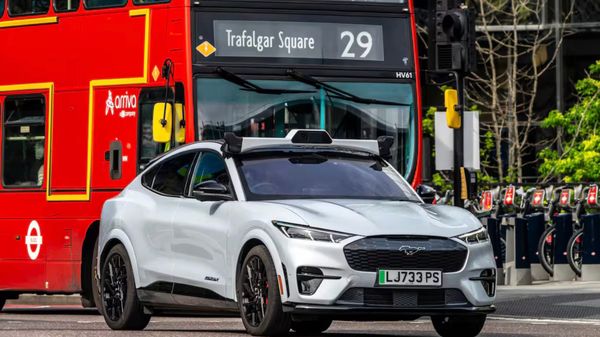
Safety-driver trials are another category. The certification agency says these require a safety driver ready, able and willing to resume control. Seeing an automated test vehicle on public roads therefore does not establish that its occupants may legally ride without human supervision. (vehicle-certification-agency.gov.uk)
Switzerland: three permitted applications—with conditions
Switzerland’s framework has permitted three categories of automated driving since March 1, 2025: motorway pilots, driverless vehicles on officially approved routes, and automated parking in designated facilities. These are conditional legal pathways, not automatic approval of every vehicle carrying the relevant hardware. (astra.admin.ch)
For an approved motorway pilot, drivers may release the wheel and stop constantly monitoring traffic, but must remain ready to take over. Federal guidance specifically rules out activities that could delay that response, including writing a phone message. Driverless route-based vehicles require supervision by an operator, potentially from a control center. (astra.admin.ch)
The same guidance says manufacturers must obtain approval for Swiss roads. That is the useful lesson for cross-border drivers: a feature’s name—or its availability elsewhere—does not establish permission to use it as an automated system in Switzerland. (astra.admin.ch)
What this means
Our assessment: Europe’s central challenge is not simply deciding whether autonomy should be legal. It is connecting technical approval, operating permission and clear human responsibilities into a system that can scale. The EU’s existing framework and November drafts address different parts of that problem. (eprs.europarl.europa.eu)
For consumers, the most useful question is not “Does this car drive itself?” It is: “What am I legally required to do while this specific function is active here?” Continuous supervision, takeover readiness and ordinary passenger status are materially different arrangements. (eur-lex.europa.eu)
For operators, our reading is that scaling remains an operational approval problem as well as a vehicle approval problem. Germany’s designated-area requirements and Britain’s passenger-service procedures illustrate why a technically capable vehicle alone is insufficient. (gesetze-im-internet.de)
What to watch next
First, enacted text—not draft headlines. Watch whether the November proposals are adopted, what changes during that process and when any final measures become applicable. Their stated purpose is to prepare the technical framework for larger-scale automated-vehicle production. (ec.europa.eu)
Second, named approvals and operating conditions. In Britain, vehicle listing and service permissions matter more than launch promises. In Germany, the approved operating area remains a concrete legal boundary. (gov.uk)
Finally, read the human-responsibility clause. If the system requires continuous monitoring, it is assistance—not a license to disengage. Europe’s rules can accommodate driverless operation, but they do not turn every assisted-driving car into a robotaxi. (eur-lex.europa.eu)
SOURCES
- European Parliament Research Service: Self-driving cars in the EU—Connected and automated vehicles
- European Commission draft delegated regulation on safety requirements for automated and fully automated vehicles, November 4, 2026
- European Commission draft implementing regulation on safety requirements for automated and fully automated vehicles, November 3, 2026
- UN Regulation No 171: Driver Control Assistance Systems
- German Road Traffic Act, Section 1b: Driver rights and duties when using automated driving functions
- German Road Traffic Act, Section 1e: Operation of vehicles with autonomous driving functions
- STRMTG: Automated road transport systems
- French transport ministry: Legislative and regulatory framework for deployment of automated road transport
- The Automated Vehicles (Permits for Automated Passenger Services) Regulations 2026
- Vehicle Certification Agency: Piloting of Self-Driving Vehicles
- Department for Transport: Self-driving vehicle pilot scheme—Information for applicants
- Department for Transport: Self-driving vehicles listed for use in Great Britain
- Swiss Federal Roads Office: Automated driving
- Swiss Federal Roads Office: Ordinance on automated driving—Frequently asked questions