NHTSA Just Ruled on Tesla's Cybercab Audit. Self-Certification Survives — Barely.
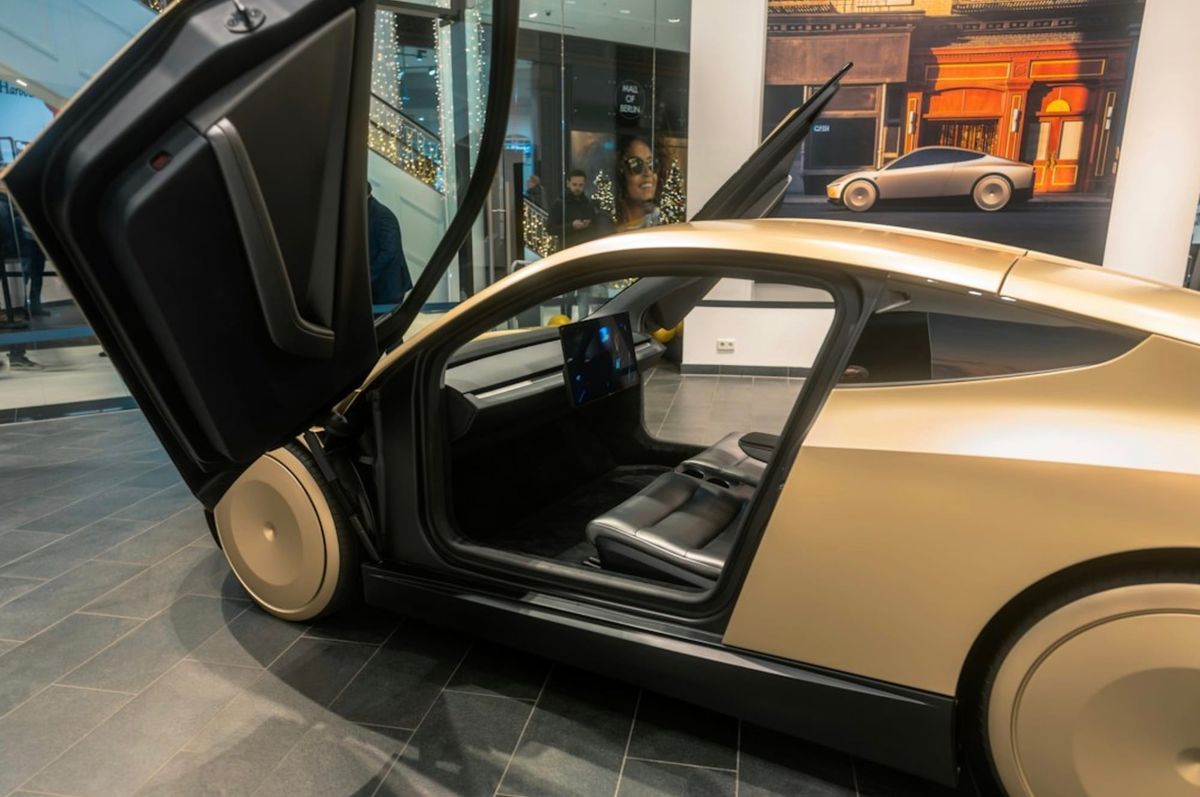
Six weeks ago, Tesla put 45 steering-wheel-free Cybercabs into paid service in Austin without seeking the kind of formal federal exemption Zoox had spent ten months securing for its own robotaxi. NHTSA opened an Audit Query into that decision within hours of launch. This week, the agency closed it — and the outcome is a split decision that neither Tesla nor its critics can claim outright.
NHTSA has concluded that Tesla's self-certification was not fraudulent or made in bad faith, but has ordered Tesla to supplement its technical justification for three specific FMVSS provisions and to submit to an expanded reporting regime that looks, in substance, a lot like the conditions Zoox accepted through the formal exemption process it skipped.
What NHTSA Actually Found
The agency's closeout letter, released Tuesday, draws a careful line. On the core question — whether a vehicle with no steering wheel and no pedals can lawfully self-certify that standards written around those components "do not apply" — NHTSA sided with Tesla's basic logic. The agency wrote that it found "no evidence Tesla acted in bad faith" and that treating inapplicable hardware requirements as inapplicable is "a reasonable reading" of existing self-certification rules for a subset of standards.
But the agency drew a harder line on three specific provisions Tesla had also waved off: occupant crash protection labeling requirements, a windshield wiper standard Tesla argued was moot given the Cybercab's sensor-cleaning system, and telltale/indicator rules NHTSA said still serve a safety function even without a driver present to see them, since remote operators and roadside responders rely on the same visual cues. For those three, NHTSA has given Tesla 60 days to either submit engineering data proving equivalent safety or file a formal Part 555 exemption petition after the fact — the exact process Tesla bypassed in September.
The Conditions Attached
Beyond the 60-day clock, NHTSA used the audit's close to attach reporting obligations Tesla did not have before: mandatory incident disclosure within 5 business days for any Cybercab collision regardless of severity, quarterly fleet-mileage and intervention-rate reporting, and a requirement that Tesla notify the agency before expanding Cybercab service to any new state. None of these are formal exemption conditions in the Part 555 sense — Tesla's self-certification technically remains intact — but functionally, Tesla now operates under a disclosure regime close to what Zoox accepted when its exemption was granted in July.
Tesla's statement on the ruling, posted to its investor relations site, called it "validation of our approach" and noted the company "will comply with the agency's request while continuing to expand Cybercab service." Tesla did not address the three contested standards directly.
The closeout answers the question this publication flagged back in September: whether self-certification for a control-free vehicle is a viable shortcut, or isn't. The honest answer, after six weeks of review, is "sometimes" — and that ambiguity may turn out to be the most consequential part of the ruling.
NHTSA did not declare self-certification broadly unsafe or require Tesla to retroactively seek a full exemption, which would have been a far more disruptive outcome for a fleet already carrying paying passengers. But it also didn't give Tesla, or anyone watching Tesla's playbook, a clean green light. Every AV developer now has a real data point: deploy first and you may keep most of your self-certification intact, but expect the compliance burden to catch up to you anyway, just on the agency's timeline instead of your own, and without the two-year predictability a formal exemption like Zoox's provides.
Zoox, notably, has not commented on the ruling. Having spent ten months in the queue Tesla skipped, the company's own exemption is locked in with clear terms through 2028 — a position several industry observers have described this week as, in hindsight, the more boring and more durable bet.
What to Watch
The 60-day clock. Tesla's response on the three contested standards, due by mid-December, will show whether the company tries to argue its way out again or simply files the Part 555 exemption it avoided in September.
Whether other self-certifying entrants follow Tesla's path or Zoox's. With a real enforcement outcome on the books instead of an open question, expect newer entrants — including any purpose-built vehicle from Xpeng, Geely, or a future Chinese entrant eyeing the US market — to treat this ruling as the reference case.
Congressional reaction. NHTSA's own rulemaking on dropping steering-wheel requirements altogether is still pending; a ruling this ambiguous gives lawmakers on both sides of the AV debate something to point to when that rule eventually comes up for comment.
Tesla's incident disclosures. The new 5-day reporting requirement means the next Cybercab collision, however minor, becomes public information almost immediately — a transparency bar Tesla has not previously operated under for its robotaxi fleet.