Driverless Trucks Are Now a Business: Aurora's Second-Generation Fleet Hits 10 US Routes
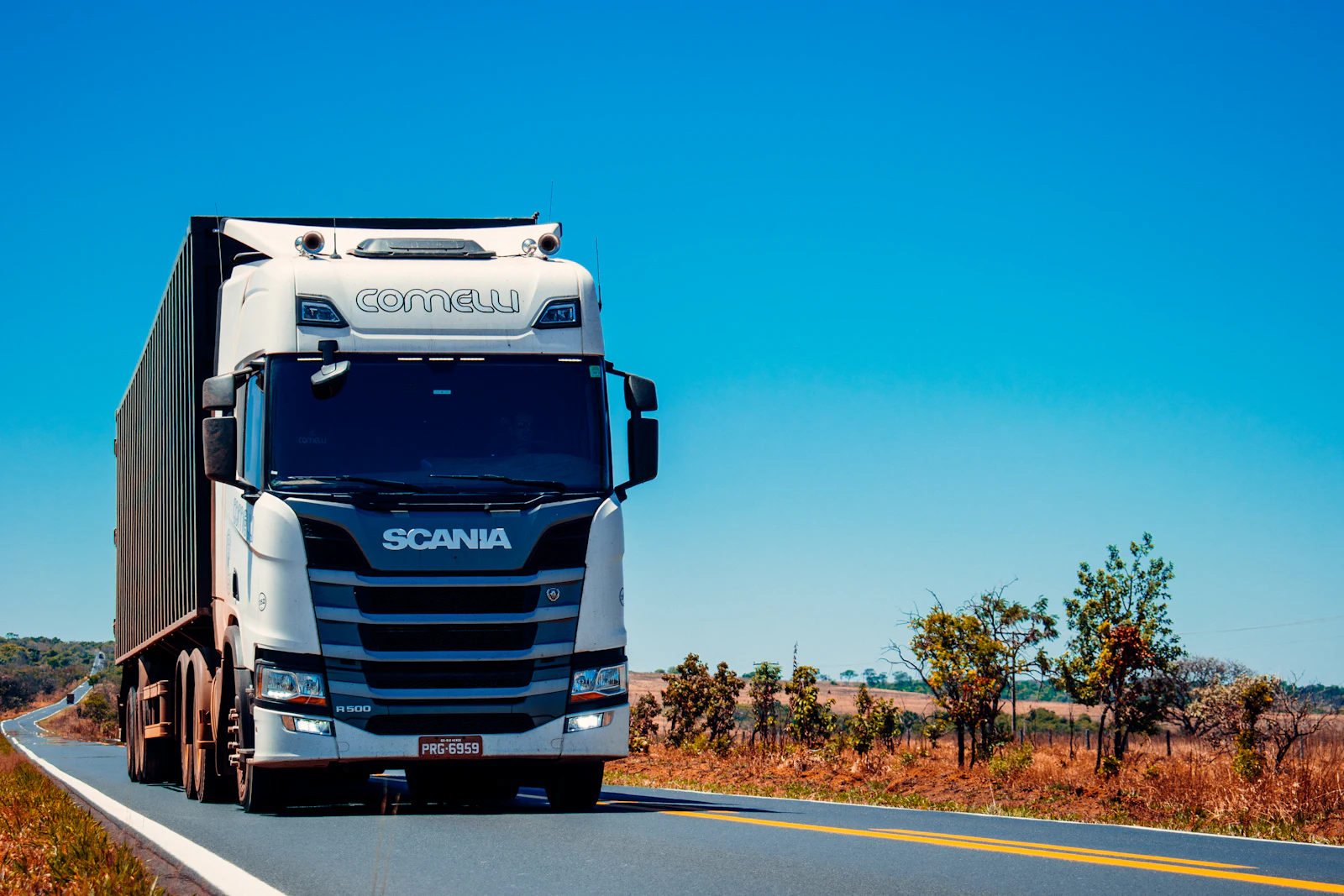
While Waymo and Tesla dominate the robotaxi headlines, a quieter autonomous vehicle story has been building in the freight lanes of the US Sun Belt — and last week it crossed a threshold that matters. Aurora Innovation launched its second-generation driverless Class 8 trucks on July 23, deploying them across a commercial network that now spans 10 routes. The new hardware is rated to last one million miles. Manufacturing partner Roush is targeting 1,000 trucks per year by the end of 2026. And one Aurora customer has already announced plans to purchase 500 Aurora Driver-powered trucks.
Autonomous trucking is no longer a technology demonstration. It is a business.
What Aurora Just Launched
Aurora's second-generation driverless truck platform is a significant upgrade from the first-generation hardware that began operating on public roads in 2025. The new system is built around hardware rated to one million miles — roughly double the lifespan of the first generation, which matters enormously for the economics of commercial freight — a cost reduction of roughly half compared to the first-generation sensor and compute suite, and integration across multiple truck platforms, including Kenworth, Peterbilt (both made by PACCAR) and International LT Series vehicles.
Manufacturing partner Roush handles the upfit process, taking standard Class 8 trucks from the OEMs and integrating Aurora's self-driving hardware and redundant safety systems. The companies have formalised a production process targeting 1,000 Aurora-equipped trucks annually by end of 2026, up from the handful of vehicles in commercial service when Aurora first launched driverless operations last year.
As of the end of June 2026, the Aurora Driver has completed nearly 440,000 driverless miles on public roads — all without incident, maintaining what the company describes as a perfect driverless safety record across its commercial network.
The Routes: Where Driverless Trucks Are Already Running
Aurora's commercial network currently covers 10 driverless routes across the US Sun Belt. The geographic strategy is deliberate: the Sun Belt offers the most predictable weather, the highest freight density and the longest straight-highway segments — all of which favour autonomous operation.
Key routes include Dallas to Houston, Aurora's inaugural commercial lane launched in 2025; Fort Worth to El Paso, a 600-mile route Aurora describes as the fastest scaling to a second market in the US self-driving industry; Midland to Monahans (Texas), serving energy sector customers including Detmar Logistics, hauling sand for oil extraction on a route combining Interstate 20 with local roads; plus eight additional Sun Belt routes across Texas and neighbouring states.
The freight customers using Aurora's trucks include Hirschbach Motor Lines, Russell Transport and Detmar Logistics — real carriers running real freight, not pilot programmes. Hirschbach's CEO has described Aurora as a tool for achieving "nearly 24/7 asset utilization" on routes that are difficult for human drivers to complete in a single legal shift.
Why Trucks Before Cars
The sequence matters. Aurora is operating commercially at scale while Tesla's Robotaxi service is still measured in dozens of vehicles per city and Waymo is working toward its first thousand-unit fleet milestone — a race we break down in Tesla Robotaxi vs. Waymo: An Honest Head-to-Head Comparison. Why are driverless trucks ahead of driverless passenger cars?
The answer is the operating environment. Long-haul trucking on highways is, from an autonomous driving perspective, a simpler problem than urban ride-hailing: predictable lane structures with clear markings, fewer pedestrians and cyclists, consistent speed limits, routes that can be pre-mapped in exhaustive detail, and no drop-off or pick-up complexity at the end of each trip. Urban robotaxis face the opposite conditions, as the recent Waymo recall over construction zones illustrated.
The tradeoffs are real — highway speeds mean higher consequences when something goes wrong, and a 40-tonne Class 8 truck carries far more destructive potential than a passenger car. But Aurora closed a formal Safety Case for its second-generation platform before public deployment, an internal framework that defines the threshold of validated performance required before driverless operations can begin. Where trucking sits on the automation ladder is explained in What is a Self-Driving Car? The Complete Guide to SAE Levels 0–5.
The Economics: Why This Is Actually Compelling
The business case for driverless long-haul trucking is stronger than for robotaxis. The US is facing a structural shortage of long-haul truck drivers, with an estimated shortfall of 60,000 drivers as of 2026 that is projected to grow. Drivers are limited by hours-of-service regulations to 11 hours of driving per day. An Aurora driverless truck can run 22 hours a day — requiring only maintenance and fuelling stops — effectively doubling asset utilisation on the same route.
Routes like Fort Worth to El Paso — 600 miles, roughly nine hours of driving — sit at the edge of what a human driver can complete in a single legal shift. A driverless truck completes the route and returns in a single day, running the same revenue-generating miles with none of the scheduling complexity.
Aurora's second-generation hardware, at half the cost of the first generation, begins to make the unit economics credible. At 1,000 trucks per year from the Roush facility and a hardware lifespan of one million miles, the per-mile cost of the Aurora Driver system is falling toward ranges where fleet operators can justify the premium over a human driver's wage. Aurora's sensor stack leans on lidar and radar rather than cameras alone — the tradeoff we examine in Lidar vs. Camera-Only: The 2026 Sensor Shootout.
The customer ordering 500 trucks — not yet publicly named — is the clearest signal that the economics have crossed a threshold for at least one major freight operator.
The Regulatory Tailwind
Aurora's expansion is happening against a notably favourable regulatory backdrop. In June 2026, the US House Transportation and Infrastructure Committee advanced the BUILD America 250 Act, which would establish the first federal framework for autonomous commercial motor vehicles. Aurora currently operates under a patchwork of state-level permissions, which creates operational complexity and limits which routes it can serve. A federal framework — with standardised safety-case standards, licensing rules and a cross-stakeholder rulemaking committee — would remove that uncertainty.
Separately, NHTSA's ongoing dismantling of manual-control requirements creates a cleaner path for purpose-built autonomous vehicles across both passenger and freight categories, as covered in The Steering Wheel Is Next: NHTSA Signals the End of a Century-Old Requirement. The same tailwind is behind Tesla's rapid multi-state rollout in Tesla Robotaxi Now Covers 7 Cities.
The European Picture
Autonomous trucking in Europe is moving more slowly than in the US, but the gap is narrowing. WeRide, the Chinese AV company partnered with Bosch on an end-to-end intelligent driving solution, began on-road testing of that system in Germany, France and Japan in recent months. At Düsseldorf Airport, MIRA, Rheinbahn and the airport authority launched real-world testing of a teleoperated shuttle on public roads, running through August 28.
The EU's approach to autonomous freight differs from the US in one important respect: European regulation has historically required a "responsible driver" who can take control of any vehicle on public roads. The new EU Autonomous Vehicle Act, effective January 2027, creates a Level 4 pathway that will include freight, but the regulatory sandbox approach means commercial driverless trucking at Aurora's scale is still several years away in most European markets. What is legal today is mapped out in Self-Driving Cars in Europe: What's Legal and What's Not in 2026.
For European readers, the Aurora story is a preview — both of what's technically possible and of what the regulatory environment needs to enable before it arrives here.
What to Watch
The BUILD America 250 Act — if the federal autonomous trucking framework passes into law, it removes the state-by-state regulatory patchwork that currently limits Aurora's network expansion. Watch for Senate action in autumn 2026.
Roush's production ramp — the target of 1,000 trucks per year by end of 2026 is ambitious. Whether Roush can hit that manufacturing rate will determine whether Aurora's commercial momentum translates into genuine fleet scale.
Named customer announcements — the unnamed customer ordering 500 trucks is the most significant commercial signal Aurora has ever received. When that customer goes public, it will likely trigger a wave of similar announcements from competitors and investors watching the sector.
Autonomous trucking has spent years promising scale. This week, for the first time, it is actually delivering it.
*Related: The Steering Wheel Is Next: NHTSA Signals the End of a Century-Old Requirement · Tesla Robotaxi Now Covers 7 Cities · How Does a Robotaxi Work? Everything You Need to Know as a Passenger*
Related articles

Baidu Just Went Live in Dubai — and Quietly Became the World's Biggest Robotaxi Operator
While Waymo and Tesla dominate the headlines at home, Baidu's Apollo Go has spent 2026 quietly building the largest robotaxi footprint on Earth — 28 cities, Dubai, Seoul and Switzerland included.

Tesla Robotaxi Now Covers 7 Cities: What the Florida Blitz Tells Us About the Race to Scale
Tesla launched in Miami, Orlando and Tampa within 18 days — going fully driverless in each from day one. Here's what the Florida expansion reveals about Tesla's strategy, its camera-only bet in tropical weather, and whether the pace can hold.

Tesla Robotaxi vs. Waymo: An Honest Head-to-Head Comparison in 2026
Waymo and Tesla now compete on the same streets. We compare coverage, technology, real-world performance, pricing and the passenger experience in mid-2026.